The United Nations Declaration on the Rights of Indigenous Peoples (UNDRIP), defines self-determination as:
The ability for Indigenous people to freely determine their political status and pursue their economic, social, and cultural development.
All First Peoples have a right, as collectives or groups, to exercise self-determination. This can look different to different groups of people.
While the UNDRIP definition provides the language to talk about self-determination, it is important to recognise the inherent right for First Peoples to define for themselves what self-determination looks like in their communities.
Some examples of what exercising self-determination might look like include:
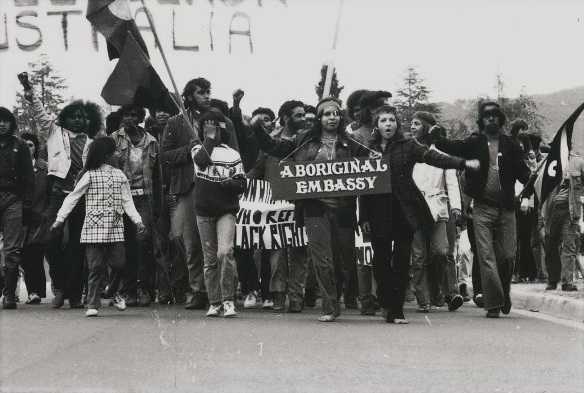
For the last 200 years since colonisation, First Peoples across Australia have called for their right to self-determination to be recognised. The impact of dispossession, violence and discriminatory policies and systems means First Peoples still face many barriers when it comes to having control over the decisions that affect their lives.
Achieving self-determination matters because it is First Peoples who know what is best for themselves, their families, and communities. When First Peoples are involved in the decision-making and governance that impact their lives, we see effective and sustainable solutions. This leads to improved outcomes for First Peoples across the country.
It is important to recognise that governments across Australia had a part in the dispossession of First Peoples and the loss of their histories, languages, and cultures. They are also responsible for many of the structures and systems that continue to govern the lives of First Peoples. To achieve self-determination, local councils must change the ways they work and operate to ensure First Peoples leadership and decision-making are embedded within their organisation.


The Victorian Aboriginal and Local Government Strategy 2021-2026 (aka the Strategy) provides a comprehensive roadmap for local councils and Aboriginal Victorians wanting to work together to achieve self-determination for First Peoples.
The Victorian Government is committed to advancing self-determination for First Peoples across the state and is guided by the following frameworks:
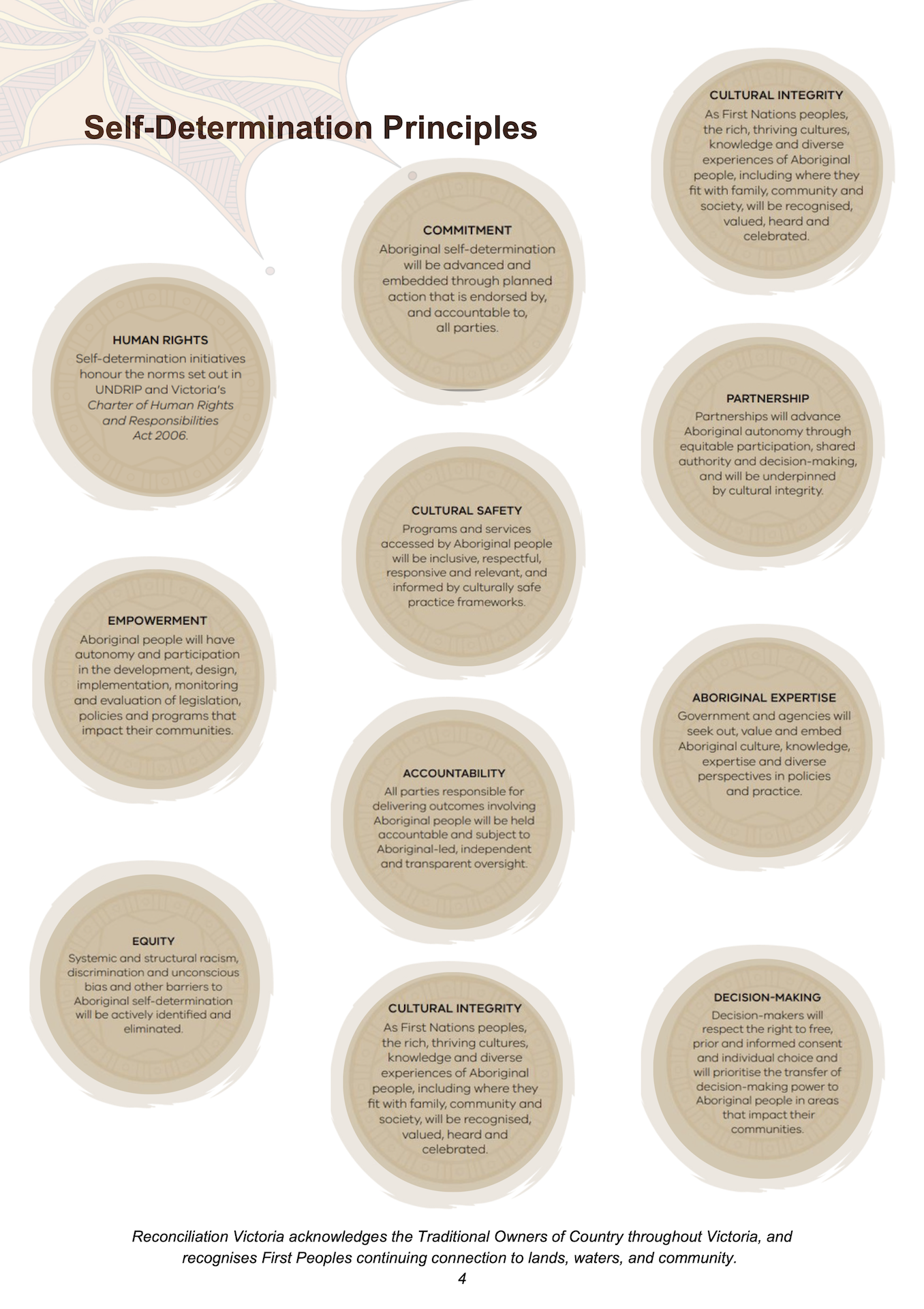
Outlined within the VAAF and the Self Determination Reform Framework are 4Enablers and 11 Guiding Principles which support the advancement of self-determination.
These enablers and principles are embedded in the framework of the Victorian Aboriginal and LocalGovernment Strategy 2021-2026 and can be used to guide local councils wanting to advance self-determination for all First Peoples across their municipality.
This video developed by Reconciliation Victoria in partnership with the Victorian Electoral Commission shares three young Aboriginal Victorians talking about what self-determination means to them.

Learn more about self-determination principles through Maggolee's First Peoples Self-Determination resource.
Acknowledge that connection to family, community, culture, and Country is critical to the wellbeing and positive self-identity of First Peoples. Strong cultural identity leads to positive outcomes and full enjoyment of the right to practice culture.
Acknowledge the long-lasting intergenerational impact of colonisation, dispossession, child removal and other discriminatory government policies. This will improve the well-being of First Peoples and their communities which is fundamental to how they engage with the structures and systems that support them to thrive
Acknowledge that connection to family, community, culture, and Country is critical to the well-being and positive self-identity of First Peoples. Strong cultural identity leads to positive outcomes and full enjoyment of the right to practice culture.
First Peoples know what is best for themselves, their families, and communities. It is the right of Aboriginal Victorians to have decision-making control and lead the development and implementation of culturally safe and relevant responses to matters that affect their lives.

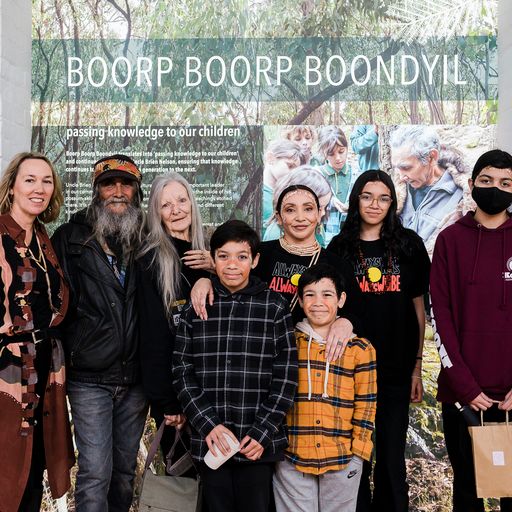
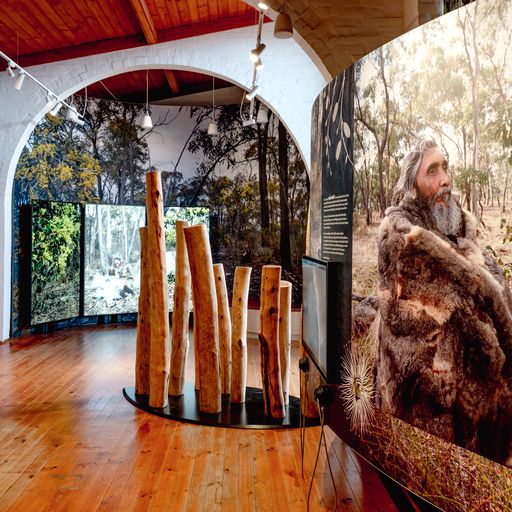
Mt Alexander Shire Council collaborated with local Elder Uncle Rick Nelson to design, develop and install the Boorp Boorp Boondyil (which in the language of the Jaara people in central Victoria loosely translates as ‘sharing knowledge with children’) exhibition.
Uncle Rick was employed by Mount AlexanderShire Council as Project Lead and worked alongside the Sharing Stories Foundation - an Aboriginal-led organisation – to create a permanent space in Castlemaine that would educate locals and visitors about the story of the Djaara or Dja Dja Wurrung peoples.
This exhibition is a product of self-determination by the Aboriginal community of the shire.


Hepburn Shire Council initiated the First Avenue of Honour in Australia to acknowledge the Frontier Wars and pay respect to the Aboriginal lives lost defending their Country. It honours Dja Dja Wurrung ancestors and creates opportunity for truth-telling and shared healing.
The project, signage and opening ceremony was created in partnership with the Traditional Owners and includes Dja Dja Wurrung language, acknowledgment graphics and dual branding.
Learn more.

In July 2021, the opening ceremony took place at the site of the Memorial Avenue on the Daylesford- Malmsbury Road near Coomoora.
Mayor Cr Lesley Hewitt and Djaara CEO Rodney Carter spoke of the significance of the Avenue in acknowledging the truth of our shared history and laid a wreath together in memory of the Djaara lives lost.